Children of Blood and Bone: The Star-Studded Adaptation Its Author Refuses to Watch
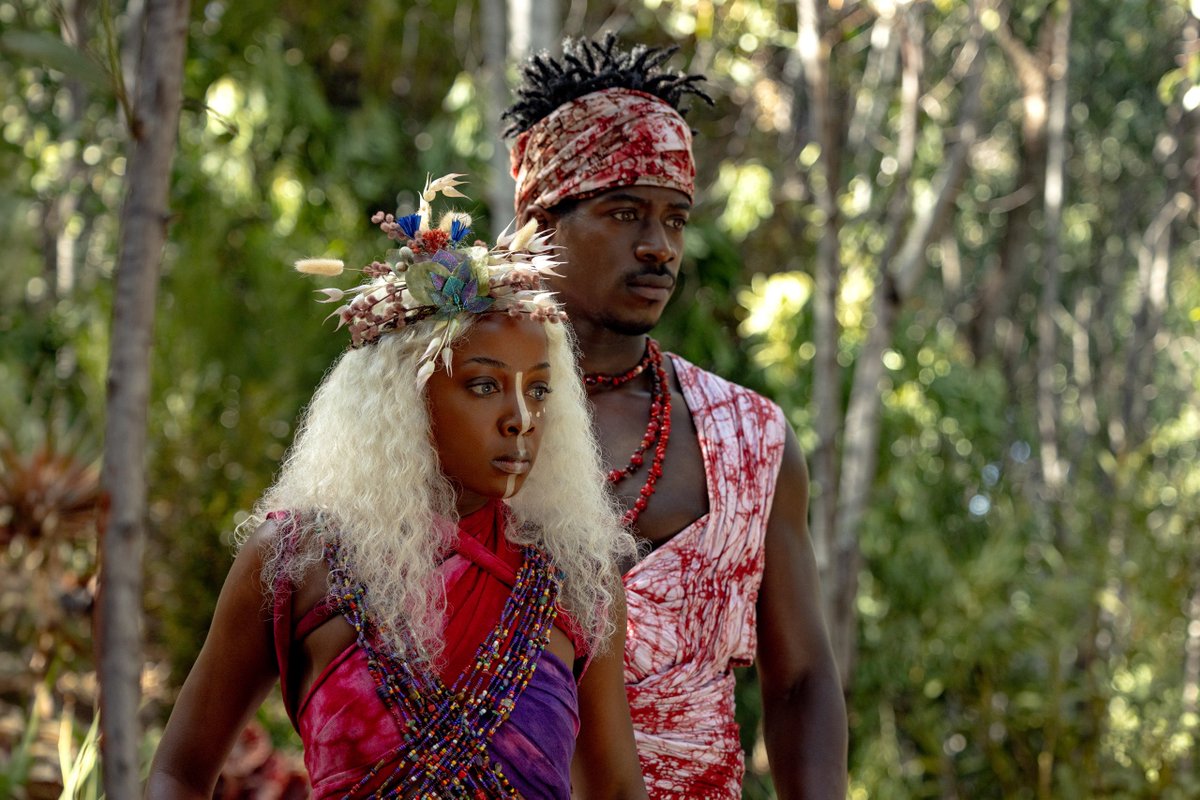
An epic fantasy inspired by West African mythology. The director of The Woman King. A cast featuring Viola Davis, Idris Elba, Regina King, and Cynthia Erivo. And an author who says she will never watch the adaptation of her own novel.
Children of Blood and Bone by Tomi Adeyemi appears to have everything it needs to become one of the biggest fantasy events of 2027. The film brings the world of Orïsha, first introduced in Adeyemi’s bestselling 2018 young adult novel, to the big screen. It is directed by Gina Prince-Bythewood, known for The Woman King and The Old Guard, while Paramount Pictures has scheduled its release for January 15, 2027.
The first official trailer promises large-scale battles, spectacular natural landscapes, and a magic system unlike almost anything previously seen in a major Hollywood production. Yet shortly after the trailer was released, Adeyemi revealed that her experience with the film had been so painful that she no longer wished to watch it, promote it, or even hear about the project.
The world from which magic was violently taken
Children of Blood and Bone is the first book in the Legacy of Orïsha trilogy. It transports readers to the harsh kingdom of Orïsha, whose culture, religion, and magic are inspired by West African and Yoruba traditions.
Magic was once an integral part of this world. Different clans of mages were connected to gods and natural forces. Some could communicate with spirits and the dead, while others controlled fire, water, healing, or dreams.
Then King Saran launched the Raid. Magic vanished, and the adult maji were slaughtered. Among the victims was the mother of Zélie Adebola, a white-haired young woman who carries the visible mark of a people stripped of both their power and their place in society.
Years after the massacre, Zélie is given an opportunity to restore the connection between humanity and the gods. The chance comes from the most unexpected place.
The princess who turns against her own father
Amari is King Saran’s daughter, raised inside the palace and sheltered from the reality endured by the oppressed people of Orïsha. Everything changes when she witnesses her father’s brutality and steals an ancient scroll capable of awakening magic once again.
Amari escapes the palace and encounters Zélie and her brother Tzain. The three embark on a dangerous journey, racing against time while pursued by the royal army. For Zélie, the mission is personal. She is fighting not only to restore magic, but also to return dignity, history, and a voice to an entire people.
For Amari, the journey represents a rebellion against the family and the system that raised her. And following closely behind them is Prince Inan.
The prince who fears his own power
Inan is the son King Saran has raised to continue his work. He is ordered to find his sister, destroy the magical scroll, and prevent Zélie from returning power to her people. During the pursuit, however, Inan discovers something that shatters everything he has ever believed.
He possesses magic himself. The prince becomes divided between his duty to his father, his fear of what he is, and his growing attraction to the world he has been sent to destroy. This is what makes the central conflict in Children of Blood and Bone more than a simple battle between good and evil. The kingdom’s violence is not directed at a foreign enemy, but at its own people—and even at the descendants of the ruler himself.
The four characters at the centre of the film
The leading role of Zélie has been given to South African actress Thuso Mbedu, known for The Underground Railroad and The Woman King. Joining her are Tosin Cole as Tzain, Zélie’s older brother and protector; Amandla Stenberg as Princess Amari; and Damson Idris as Prince Inan.
Chiwetel Ejiofor plays the merciless King Saran, while Regina King portrays Queen Nehanda. Cynthia Erivo appears as Admiral Kaea, Idris Elba as Lekan, and Lashana Lynch as Jumoke. Viola Davis, whose presence has featured prominently in the promotional materials and posters, plays Mama Agba.
Orïsha without green screens
Gina Prince-Bythewood and her team have constructed the world of Orïsha not only through computer-generated effects, but also through real natural landscapes. Filming took place in 2025 in South Africa and the Canary Islands. Reaching some of the locations required the cast and crew to undertake difficult journeys into remote areas rather than shooting the scenes entirely against green screens.
Production design was entrusted to Hannah Beachler, who won an Academy Award for creating the world of Wakanda in Black Panther. The first footage reveals pink rivers, vast deserts, monumental palaces, fiery battles, and carefully developed costumes, hairstyles, and ritual symbols.
The ambition is clear: Orïsha should not resemble yet another European medieval kingdom dressed in different scenery, but an independent African fantasy world with its own history, religion, and visual language.
From a dream adaptation to a public rupture
The journey of Children of Blood and Bone to the screen began before the novel was even published. The rights passed through several studios and creative teams before Paramount acquired the project. Adeyemi co-wrote the screenplay with Gina Prince-Bythewood and is also credited as an executive producer.
For years, the author spoke enthusiastically about the adaptation. In 2024, she described working with the director as enjoyable and inspiring and emphasised that they shared the same vision. By the summer of 2026, however, the relationships behind the scenes had clearly changed dramatically.
On July 4, Adeyemi posted a video and several messages announcing that she would not support, promote, or watch the film. She encouraged readers who wished to support her to purchase the books from independent bookshops.
The author said that contractual restrictions had prevented her from speaking openly for a long time and that she was stepping away because she could no longer allow herself to be hurt and antagonised behind the scenes.
The controversy surrounding Amandla Stenberg
The first public controversy emerged after Amandla Stenberg was cast as Amari. Some readers accused the production of colorism because the princess is described in the novel as having much darker skin.
The criticism extended beyond the familiar debate over whether an actor sufficiently resembles a literary character. It reflected a wider problem within the film industry, where roles written for dark-skinned women are frequently given to actresses with lighter skin.
In February 2025, Stenberg released a lengthy video acknowledging the importance of the conversation while defending her decision to accept the role. The actress said she had spoken personally with Adeyemi and had believed that the author supported her casting.
According to Stenberg, Adeyemi told her that the actress’s performance as Rue in The Hunger Games, along with the racist backlash she faced, had been among the experiences that inspired the author to create her series.
Only days after filming began, however, the relationship between them apparently broke down.In July 2026, Adeyemi published part of a private exchange from February 2025 in which she told Stenberg: “Never use my name in an interview or video again. Do not text me. Do not call me.” She then blocked the actress.
“The worst thing I have ever lived through”
Following the release of the official trailer on July 28, 2026, Adeyemi revealed more about her decision to separate herself from the project. In a five-minute video, she described working on the film as: “The worst thing I have ever had to live through.” The author said she had left the set sobbing and hyperventilating in front of numerous witnesses.
After returning to the United States, she reportedly experienced severe panic attacks and physical pain connected to psychological stress. She claimed that people at the highest levels of the production knew about her condition but continued to antagonise her over the following eighteen months.
Adeyemi has not revealed exactly what happened on set and has not named a particular individual as responsible. Stenberg, Paramount Pictures, and director Gina Prince-Bythewood have not yet issued a detailed public response to Adeyemi’s allegations.
Can the film exist separately from its author?
The first trailer for Children of Blood and Bone looks impressive. The scale is enormous. The cast is exceptionally strong. And the world of Orïsha appears different from almost anything major Hollywood studios usually offer within the fantasy genre. Yet one uncomfortable question will inevitably hang over the film:
How can audiences celebrate the adaptation of a story when the woman who created it says that the process of bringing it to the screen traumatised her? The film will probably be judged on its own merits. The work of hundreds of actors, designers, cinematographers, stunt performers, and technical specialists cannot be reduced to a single behind-the-scenes conflict.
But Tomi Adeyemi’s absence from the premiere will not go unnoticed. Children of Blood and Bone is a story about people whose voices have been taken away, a system that decides who has the right to possess power, and a young woman who refuses to remain silent. There is therefore a particular and painful irony in the adaptation arriving in cinemas without the support of the woman who first gave Orïsha its voice.
Join the community
Your library starts here
Every book leaves a mark.
Create your profile and turn what you read into your personal library.
Follow us on social media: