Historian
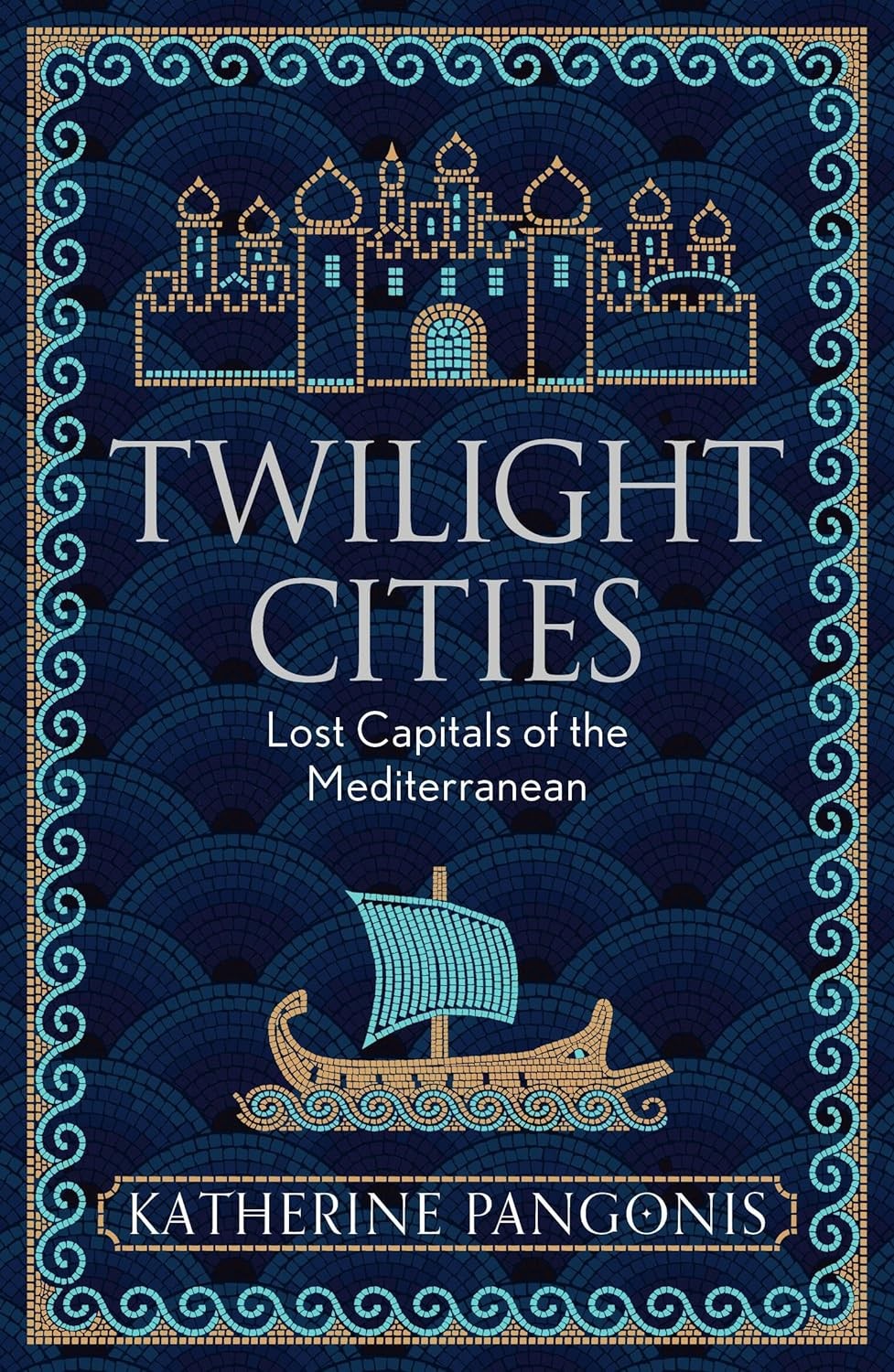
Twilight Cities, Katherine Pangonis
History tends to remember empires through a handful of immortal names – Rome, Athens, Constantinople. Yet entire civilizations were also shaped by cities that once rivaled them in wealth, influence and cultural brilliance before slowly fading into the background of history. In Twilight Cities, historian Katherine Pangonis turns her attention precisely toward those forgotten centers of power.
Rather than retelling the familiar stories of dominant empires, she reconstructs the lives of cities that once stood at the heart of the Mediterranean world – Tyre, Antioch, Carthage, Syracuse and Ravenna. The result is far more than a historical study. It is a meditation on decline, memory and the fragile nature of human greatness.
The cities history almost forgot
One of the most fascinating aspects of Twilight Cities is the way Pangonis presents these cities not as ruins frozen in time, but as living organisms that experienced ambition, transformation and collapse.
Tyre – the city Alexander the Great could not ignore
Long before Rome dominated the Mediterranean, Tyre was one of the wealthiest Phoenician cities in the world. Its merchants controlled vast trade networks, and the city became famous for producing Tyrian purple – a dye so expensive it became associated with royalty itself.
When Alexander the Great attempted to conquer Tyre in 332 BC, the city resisted for months from its island fortress. According to historical accounts, Alexander eventually ordered the construction of a massive causeway across the sea simply to reach it – permanently altering the geography of the coastline.
Antioch — where worlds collided
Founded by the Seleucids after the death of Alexander, Antioch became one of the largest cities of the ancient world.
Pangonis explores how it stood at the intersection of Roman, Greek, Persian and early Christian influences. It was here, according to many historians, that followers of Jesus were first called “Christians.”
Yet despite its immense cultural importance, Antioch gradually declined after earthquakes, invasions and shifting trade routes weakened its influence.
Today, much of its grandeur survives only through scattered ruins and historical memory.
Carthage — Rome’s greatest fear
Perhaps no city in the book carries such mythic weight as Carthage.
The rivalry between Punic Wars and Rome shaped the future of the Mediterranean world. Pangonis revisits not only the military conflict, but also the sophisticated civilization behind the legend.
Readers encounter a Carthage that was highly urbanized, commercially powerful and intellectually vibrant long before its destruction.
One of the most striking historical details remains the story that after defeating Carthage, the Romans symbolically cursed the city and erased much of its history — ensuring that future generations would know Carthage mostly through Roman eyes.
Syracuse — the city of Archimedes
Modern audiences often associate Syracuse with the mathematician Archimedes, but Pangonis reveals a far more complex city.
Located in Sicily, Syracuse became one of the most powerful Greek colonies in the Mediterranean and repeatedly found itself caught between competing empires.
Archimedes himself became part of its legend during the Roman siege of the city, when ancient writers claimed he designed extraordinary defensive machines capable of destroying enemy ships.
Whether entirely true or partially mythologized, these stories transformed Syracuse into a symbol of ingenuity and resistance.
Ravenna — the final shadow of Rome
Unlike the others, Ravenna’s greatness emerged during the twilight of the Roman Empire itself.
Protected by surrounding marshlands, the city became the capital of the Western Roman Empire during its final centuries. Pangonis describes Ravenna as a place where Roman authority, Christianity and Byzantine influence merged into something entirely unique.
Even today, Ravenna’s mosaics are considered among the greatest surviving artistic treasures of Late Antiquity.
More than a history book
What makes Twilight Cities so compelling is that Pangonis constantly connects ancient decline with modern questions – why do civilizations collapse, how does memory survive after power disappears And what remains when a city loses its political importance but retains its cultural soul.
A meditation on impermanence
Ultimately, Twilight Cities is not simply about ruins or forgotten capitals. It is about impermanence itself. Empires fall, trade routes disappear, religions evolve, political centers shift. And yet fragments remain – in architecture, language, myths and collective memory.
That is precisely what gives the book its emotional weight. Pangonis reminds readers that history is not only written by victorious capitals like Rome or Constantinople, but also by the cities that once burned just as brightly before slowly fading into silence.
About the author
Katherine Pangonis is a historian specializing in Late Antiquity and the Byzantine world. Her academic work often focuses on the cultural and political transformation of the Mediterranean after the fall of classical empires — precisely the historical atmosphere that shapes Twilight Cities.
Before writing the book, Pangonis contributed to historical publications and research exploring how cities survive through memory even after losing their political importance.
One of the reasons Twilight Cities feels so vivid is that Pangonis combines academic research with personal travel experiences. Rather than treating these places as distant ruins, she visits them, observes how modern life exists among ancient remains and asks what survives after centuries of decline.
Join the community
Your library starts here
Every book leaves a mark.
Create your profile and turn what you read into your personal library.
Follow us on social media: