
Biographical
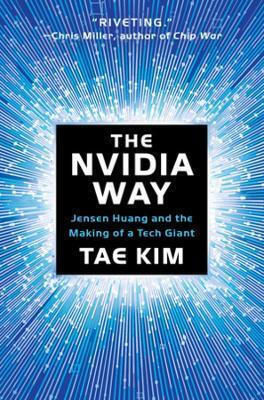
The Nvidia Way, Tae Kim
The rise of Nvidia from a small graphics card company to one of the most powerful technology corporations on the planet sounds almost unreal. Yet that is exactly the story explored in The Nvidia Way by Tae Kim — a book that combines business biography, technological history and an inside look at one of the most ambitious companies in Silicon Valley.
The rise of Nvidia from a small graphics card company to one of the most powerful technology corporations on the planet sounds almost unreal. Yet that is exactly the story explored in The Nvidia Way by Tae Kim — a book that combines business biography, technological history and an inside look at one of the most ambitious companies in Silicon Valley.
The book follows the journey of Jensen Huang and Nvidia from the company’s difficult beginnings in the 1990s to its transformation into the driving force behind artificial intelligence, machine learning and modern computing.
Today Nvidia is often associated with AI and trillion-dollar market valuations, but Tae Kim reminds readers that for years the company was considered an outsider fighting against giants like Intel and AMD. Nvidia survived multiple near-failures, brutal competition and moments when the company itself believed it might collapse.
Jensen Huang and the philosophy behind Nvidia
At the center of the story stands Jensen Huang — Nvidia’s co-founder and CEO, famous for his black leather jackets, relentless work ethic and almost obsessive attention to detail.
One of the most interesting aspects of The Nvidia Way is how Tae Kim presents Huang not simply as a brilliant executive, but as someone shaped by adversity and constant pressure.
Born in Taiwan and later moving to the United States, Huang worked from a very young age and studied electrical engineering before co-founding Nvidia in 1993.
In interviews, Huang often explains that Nvidia’s success was built on the willingness to take enormous risks:
“If we knew how hard it would be, we probably wouldn’t have started.”
This mindset becomes one of the central themes of the book.
Tae Kim describes how Nvidia repeatedly invested in technologies years before the market fully understood their potential. One of the boldest examples was CUDA — Nvidia’s parallel computing platform launched in 2006.
At the time, many analysts questioned why a graphics company was investing so heavily in software infrastructure. Years later, CUDA became one of the main reasons Nvidia dominated the AI revolution.
Interesting facts from “The Nvidia Way”
Nvidia almost failed multiple times
According to Tae Kim, Nvidia came dangerously close to collapse during its early years. The company burned through cash rapidly and depended heavily on the success of specific chip launches.
One failed product could have ended everything.
Jensen Huang later admitted that surviving those years shaped the culture of Nvidia:
“Pain and suffering are important. Greatness is not intelligence. Greatness comes from character.”
Nvidia originally focused on gaming
Long before AI transformed the company, Nvidia’s primary goal was creating powerful graphics cards for gamers.
The GeForce series helped establish Nvidia as one of the dominant players in PC gaming and eventually created the technological foundation that later enabled advances in artificial intelligence.
Ironically, the gaming industry indirectly helped build the infrastructure behind modern AI.
AI changed everything
The explosion of machine learning and generative AI completely transformed Nvidia’s role in the tech world.
Researchers discovered that GPUs were far more effective than traditional CPUs for training neural networks.
This turned Nvidia from a gaming company into the backbone of the AI industry.
Today many of the world’s largest AI systems depend on Nvidia hardware.
Jensen Huang still reviews product details personally
One recurring detail in the book is Huang’s extreme involvement in product development.
Former employees describe him as demanding, intense and deeply involved in engineering decisions.
Tae Kim notes that Huang often reviews presentations personally and expects teams to explain complex technical problems with complete clarity.
The culture inside Nvidia
One of the most fascinating sections of The Nvidia Way explores Nvidia’s internal culture.
Unlike many large corporations that become slower over time, Nvidia intentionally tries to maintain a startup mentality.
The company is known for:
- aggressive long-term thinking;
- extremely high expectations from employees;
- rapid decision-making;
- willingness to abandon projects quickly if they stop being useful.
Former employees interviewed by Tae Kim describe Nvidia as both exhausting and exhilarating.
Many say the pressure is immense, but so is the feeling of building something historically important.
Tae Kim on writing the book
Tae Kim, a technology journalist and former senior writer at Barron’s, spent years researching Nvidia and interviewing current and former employees, engineers and executives.
In interviews about the book, Kim explains that he wanted to show Nvidia not simply as a financial success story, but as a company driven by engineering obsession and long-term vision.
He also points out that many people underestimated Nvidia for decades because they viewed it only as a gaming hardware company.
According to Kim:
“Nvidia succeeded because it kept preparing for the future before everyone else saw it coming.”
More than a company story
What makes The Nvidia Way particularly compelling is that the book is not only about technology. It is also about ambition, leadership, risk and survival.For readers interested in technology, business strategy or the future of artificial intelligence, The Nvidia Way offers a surprisingly accessible and engaging look behind one of the most influential companies of our era.
And perhaps the most impressive part of the story is this:
Nvidia did not become dominant because it reacted faster than everyone else.
It became dominant because it spent years building for a future most people believed was still science fiction.
Join the community
Your library starts here
Every book leaves a mark.
Create your profile and turn what you read into your personal library.
Follow us on social media: