
Review
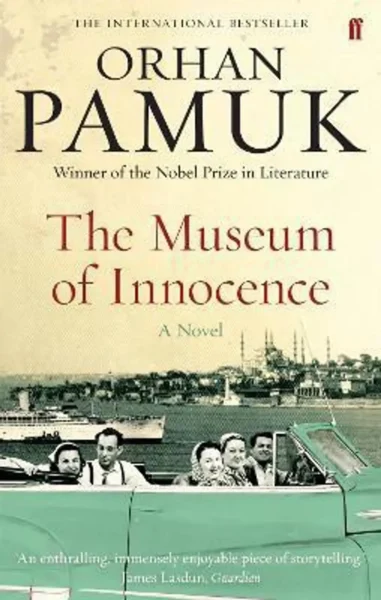
The Museum of Innocence by Orhan Pamuk is not simply a love story — it is a study of obsession, memory, and the quiet ways in which people try to give meaning to their own pain.
I picked up the novel after the recent Netflix adaptation brought it back into the spotlight. Years ago, I had read My Name Is Red, but it left only a vague impression on me. This time, however, Pamuk’s story held me captive for weeks.
On the surface, the plot is deceptively simple.
Kemal, a wealthy businessman, is engaged to Sibel — sophisticated, educated, the “right” choice. At the same time, he begins an affair with Füsun, an eighteen-year-old shop assistant, and quickly falls in love with her. What begins as passion gradually transforms into obsession — something deeper, darker, and ultimately destructive. And when Kemal finally decides to fight for their love, it is already too late.
It sounds familiar. Almost trivial.
But this novel is not just about Kemal and Füsun. It is equally a portrait of Istanbul in the 1970s and 1980s — a city suspended between East and West, between tradition and modernity, between what is allowed and what is merely tolerated.
The rhythm of the book can feel suffocating at times, weighed down by Kemal’s fixation. Yet the tension here is not driven by action, but by interior collapse — by the slow erosion of reason under the weight of desire.
Pamuk’s Istanbul is alive. Not just a setting, but a system — almost a chessboard.
Kemal and his social circle represent the bourgeois elite, people whose lives unfold in gossip columns and carefully curated appearances. On the other side stands Füsun’s world — distant relatives, modest means, a life shaped by limitation rather than privilege.
Through this contrast, the novel quietly dissects social codes: reputation as currency, female sexuality as something regulated and observed, freedom as something unevenly distributed.
Füsun is driven, alive, unwilling to be confined. Sibel, in contrast, is rational, controlled, socially acceptable — the safe choice. Kemal understands the difference between them, yet still believes he can have both: stability with one, passion with the other.
He is wrong.
When he finally returns to Füsun, she is married.
And yet, he does not let go.
Instead, Kemal finds a way to remain in her life — becoming a constant presence in her family home, in a modest neighborhood far removed from his own world. Over time, his obsession takes on a physical form: he begins collecting objects Füsun has touched — cigarette butts, small items, fragments of everyday life — and builds what becomes the “Museum of Innocence.”
A monument to love.
Or perhaps to loss.
At times, the narrative seems to stagnate — caught in repetition, in longing, in silence. Many readers give up precisely here, discouraged by the lack of momentum.
But beneath that stillness, something profound is unfolding.
This is why the novel demands patience — and why it rewards it.
Booklovers Rating: 5/5
This is a book that stays with you long after the final page. Not because of what happens, but because of what it reveals — about obsession, about memory, and about the fragile ways we try to preserve what we’ve lost.
Join the community
Your library starts here
Every book leaves a mark.
Create your profile and turn what you read into your personal library.