Historic
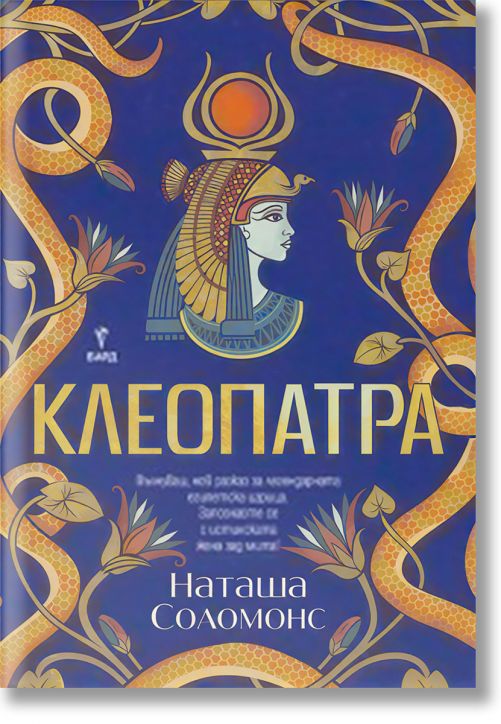
I Am Cleopatra, Natasha Solomon
Solomons arrives with an ambitious promise — to dismantle the long-standing myth of Cleopatra as a fatal seductress and instead reveal her as a ruler, a strategist, and a woman forced to make impossible choices.
In recent years, there has been a clear shift toward re-examining the roles of influential women throughout history, and Cleopatra by Natasha Solomons fits squarely within that movement.
Following the death of the Pharaoh, Cleopatra and her brother Ptolemy are declared joint heirs to the throne. As Cleopatra travels along the Nile to consolidate her power, Ptolemy begins plotting in the capital — a quiet but dangerous plan to remove her and rule alone.
The novel traces Cleopatra’s life from her youth in the politically fractured Egyptian court to her encounters with Julius Caesar and Mark Antony. Solomons shapes her as a woman fighting not only for power, but for survival — her own, her children’s, and that of her civilization.
The narrative unfolds through dual first-person perspectives: Cleopatra herself, and Servilia, Caesar’s lover. From Booklovers’ perspective, it is worth noting that in her effort to present Cleopatra in a new light, Solomons may at times lean toward romanticizing her. Still, the novel is grounded in extensive research, drawing from ancient sources and Roman chronicles, with a clear intention to separate historical truth from the propaganda that has long shaped Cleopatra’s image.
In an interview, Solomons shares:
“I wanted to give Cleopatra her voice back. Her story has been told by men for centuries — it was time for her to speak for herself.”
She adds:
“Cleopatra was not simply a seductress. She was highly educated, spoke multiple languages, and ruled in an extraordinarily dangerous world. I was interested not only in how she lived, but how she loved, how she lost, and how she made decisions that shaped history.”
Regardless of how far the novel may drift from historical accuracy, one thing is certain — modern Egyptians are unlikely to protest this portrayal of Cleopatra, unlike the backlash that followed Jada Pinkett Smith’s announcement of a series about the ruler.
Cleopatra — Facts Behind the Myth
Cleopatra was not Egyptian by origin
She belonged to the Ptolemaic dynasty — Greek rulers descended from Alexander the Great.
An exceptionally educated ruler
Unlike many of her predecessors, Cleopatra spoke Egyptian, along with several other languages.
A politician, not just a lover
Her alliances with Caesar and Mark Antony were strategic moves aimed at protecting Egypt.
Her death remains a mystery
Legend claims she died from the bite of an asp, but historians are not entirely certain.
Her image has been heavily distorted
Much of what we know about Cleopatra comes from Roman sources, which had strong motives to portray her negatively.
Стани част от общността
Твоята библиотека започва тук
Всяка книга оставя следа.
Създай профил и превърни прочетеното в твоя лична библиотека.
Follow us on social media: