Review
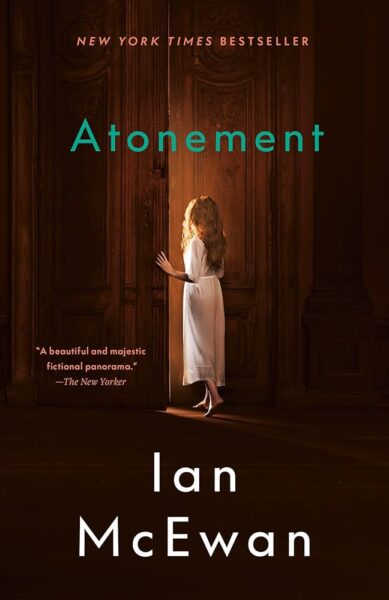
Atonement, Ian McEwan
Atonement by Ian McEwan can only be compared to a slowly aging wine — with every passing page, it deepens, unfolds, and draws you further in, until you can no longer look away. But it is not a novel to be consumed in large gulps. It demands patience, attention, and a willingness to sit with every sentence.
That, however, is where the metaphor ends.
Atonement can be loosely divided into three parts. The first focuses almost entirely on the “crime,” unfolding in a style reminiscent of Virginia Woolf, where the events of a single summer day are presented through the shifting perspectives of its central characters.
There is little action — and that is precisely the point. Instead, we are immersed in their thoughts, their pasts, their fragile hopes for the future.
It is here that thirteen-year-old Briony misinterprets the relationship between her older sister Cecilia and Robbie. Driven by her own inner impulses, she commits a “crime” — one she will spend the rest of her life trying to atone for.
The characters unfold in layers. Briony is a child, but also a kind of god within her own narrative. Cecilia and Robbie stand on the threshold of something real — a love that is cut short before it can fully bloom.
Briony becomes intoxicated by the attention she receives, and it grants her the power to shape her own version of reality. Over the course of the novel, she transforms into accuser, judge, and ultimately… a remorseful narrator unable to erase her guilt.
It is in Briony’s voice that the novel finds its deepest irony, its pain, and its longing for redemption. She is an unreliable narrator we cannot fully love — but cannot entirely reject either.
Because of her, Atonement is not simply a story. It is a disturbing and masterful interplay between reality, guilt, and storytelling itself.
Had it been told “objectively,” it would have been just a tragedy. Instead… it is literature. Pure, profound, and deeply uncomfortable. The second part shifts in pace, set against the backdrop of the Second World War. Here, fragments of narrative begin to reveal the consequences of Briony’s actions — though not yet their full meaning.
The third part is best left untouched, for fear of revealing too much. Its resolution is so powerful that it forces you to question everything you have read before.
Reading Atonement inevitably invites comparison with contemporary bestsellers — many of which rely on fast-paced plots but lack depth in character development. At least, that has often been my experience.
That is precisely why reading McEwan’s novel feels so rewarding.
⭐ Booklovers Rating
Booklovers rates Atonement 5 out of 5 stars.
A novel that demands your attention — and rewards it long after the final page.
Join the community
Your library starts here
Every book leaves a mark.
Create your profile and turn what you read into your personal library.