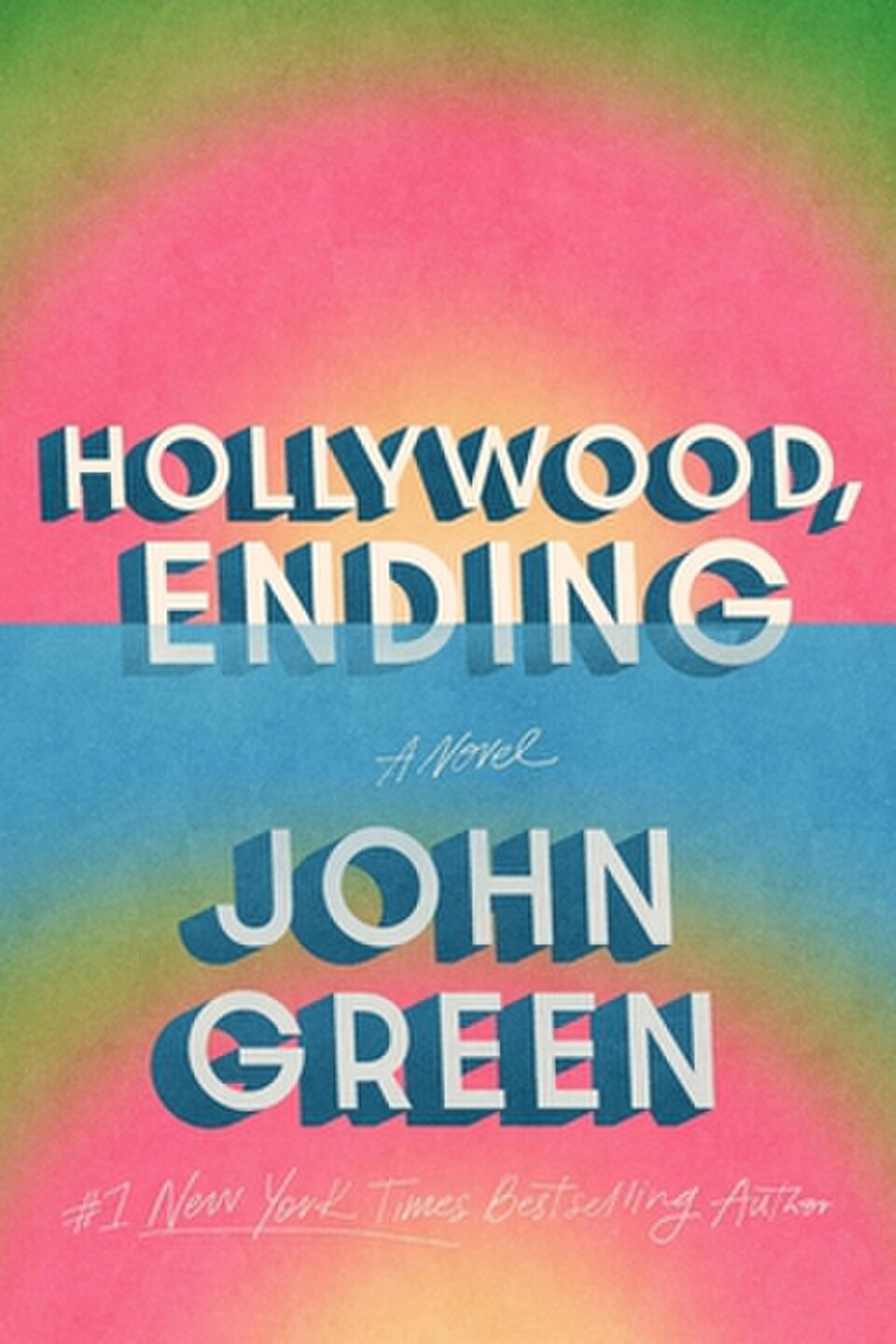
What happens when you finally achieve the fame you dreamed of – only to discover that, along with it, you have sold part of your private life? After nearly a decade away from fiction, John Green returns with Hollywood, Ending, his first novel written for an adult audience.
The author who turned Looking for Alaska, The Fault in Our Stars, and Paper Towns into defining books for a generation of readers now turns his attention to people who have already taken the first step toward success. And discover that it may have been the easiest part.
At the center of the story are two young actors, Kai Laramie and Juniper Castillo, who land the leading roles in a film about Andy Warhol. For both of them, it is the kind of opportunity that could change everything. Their careers begin to accelerate. A relationship develops between them. The film attracts more and more attention. And then Hollywood realizes that their private lives may be almost as marketable as the movie itself.
When Private Life Becomes Content
Fame has always been one of Hollywood’s favorite subjects. But according to John Green, the question no longer concerns only actors, musicians, and writers. It concerns almost everyone.
“It used to be that this was a question mostly for celebrities, mostly for actors and to a lesser extent novelists. Now, it is a question for everyone because we all participate in this attention economy. We all transform our private lives into publicly consumable goods, whether that’s posting about our dog’s death on Facebook or our marriage on Reddit or whatever. These questions about how best to handle the publicization of one’s private life are no longer rarefied.”
And that is one of the most interesting layers of Hollywood, Ending. Because the studio surrounding Kai and Juniper is not simply marketing the film. It begins marketing them – their pasts, their relationship, their traumas.
Things that once belonged only to them gradually become part of the promotional strategy. And this is where the novel moves beyond the relatively familiar story of young actors suddenly placed under the spotlight. Because you do not have to be a Hollywood star to recognize the mechanism.
A Film About Andy Warhol – Hardly a Coincidence
It is also unlikely to be accidental that the film within the novel is about Andy Warhol. Few artists understood the relationship between art, fame, image, and the transformation of a person into a product quite as well as he did. In the fictional Andy Warhol Never Gets Old, Kai and Juniper are given the opportunity to take part in a film that could transform their careers.
Gradually, however, their own public images begin to be processed almost like products moving through a factory – what should they say, how should they look, which parts of their past can be told? Which pain is personal enough to feel authentic and marketable enough to become part of a promotional campaign? What begins as a love story gradually becomes a novel about who gets to control the story of your own life.
John Green Has Already Been on the Other Side of the Camera
The subject is hardly accidental. More than two decades after his debut with Looking for Alaska, John Green is one of the most recognizable authors in contemporary young adult literature. The Fault in Our Stars turned him into a global phenomenon, while the success of its film adaptation added another layer to his fame. Together with his brother Hank, he also built a huge online following during the early years of YouTube. Green did not simply gain readers. He gained followers.
And gradually, he began to understand that the two are not always the same thing. One memory from the set of The Fault in Our Stars is particularly revealing:
“I remember suddenly becoming conscious on the set of The Fault in Our Stars that everyone cared what I thought. The reason they cared what I thought was not because I’m an incredibly compelling person, but because I had millions of followers on Twitter and at any moment I could blow up the movie. Understanding that with the sacrifices involved in participating in the social internet – there is also an exchange of power.”
That experience feeds directly into the novel’s larger question: What does it mean to want to be famous when fame is no longer simply a consequence of success, but an industry in its own right?
Returning to Fiction Is More Personal, Too
There is another reason Hollywood, Ending is a particularly significant book for Green. After Turtles All the Way Down, he spent years away from novels and published nonfiction instead. But Green admits that writing fiction leaves him feeling far more vulnerable. Not because he is literally telling his own life story. Almost the opposite. “I have to go to deeper places within me. I have to go to places that nobody else knows about, not even the people closest to me.”
For Green, that is the difficult part of writing fiction. The author asks readers to bring their own deepest fears, traumas, loves, and losses into the story. So he has to be willing to do the same first. Perhaps that is why a novel about two fictional actors can feel so close to the real experience of the man who wrote it.
And perhaps the most interesting question is not whether two young actors can survive Hollywood. It is how much of themselves they can keep once Hollywood realizes how well the rest can be sold.
Стани част от общността
Твоята библиотека започва тук
Всяка книга оставя следа.
Създай профил и превърни прочетеното в твоя лична библиотека.
Follow us on social media: