
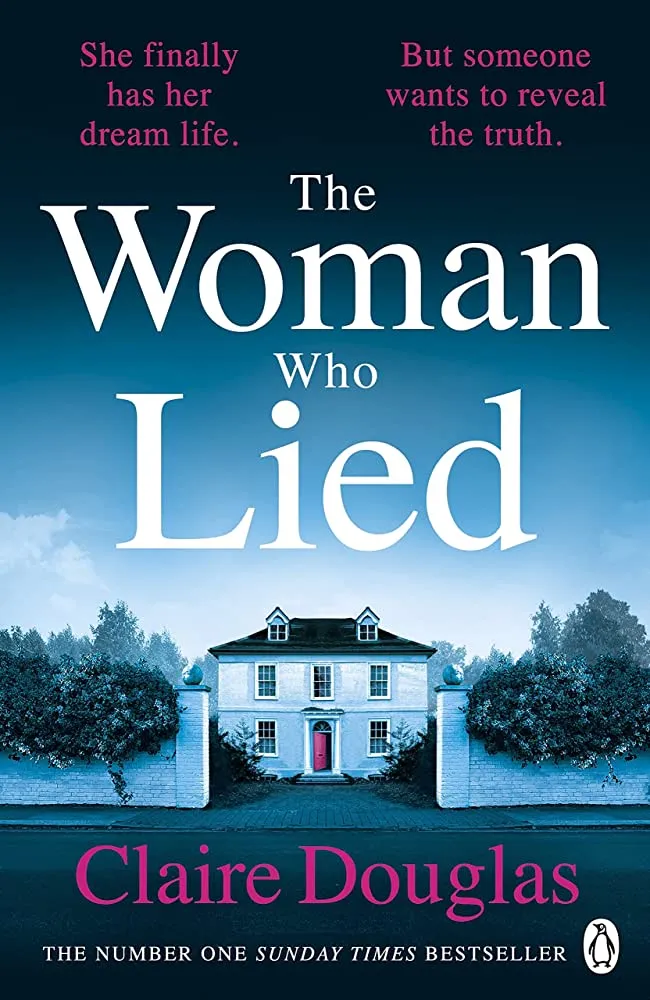

I picked up The Woman Who Lied by Claire Douglas after receiving a recommendation, and perhaps approaching a book with high expectations inevitably makes disappointment more likely. Or maybe psychological thrillers tend to orbit around similar ideas, making it increasingly difficult to find one that doesn’t, at some point, let you down.
The premise immediately captures your attention.
Emilia Ward appears to have everything she has ever wanted: a beautiful home in the London suburbs, two children, a loving family, and a successful career as the author of the hugely popular Miranda Moody detective series. As she prepares to write the final installment of the saga, something unsettling begins to happen — events from her previous novels start occurring in real life.
At first, Emilia convinces herself that these are merely coincidences. But when incidents from her unpublished manuscript also begin to unfold — including the death of one of her closest friends — denial is no longer an option. Someone close to her seems to know her darkest ideas before they reach the page.
And Emilia is forced to ask herself: who has targeted her, and can she uncover the truth before it’s too late?
What distinguishes The Woman Who Lied from many psychological thrillers is Douglas’s decision to layer multiple narratives within the same story. Alongside Emilia’s increasingly desperate attempts to understand what is happening around her, readers are given excerpts from her latest manuscript, as well as passages featuring Miranda Moody’s investigations.
A book within a book within another book.
It’s an ambitious and effective concept that gradually heightens the suspense. And there are even more surprises waiting beneath the surface, though discovering them is part of the novel’s appeal.
What I found missing, however, was the genuine sense of dread one expects from a psychological thriller.
When Emilia begins receiving anonymous notes and unsettling „gifts,“ when she realizes someone has entered her home and hacked into her security system, I never truly felt afraid for her. Instead, I found myself wondering: What happens next? I couldn’t help imagining how these scenes might have been handled by a Scandinavian crime writer, where atmosphere alone can create unbearable tension. Throughout the novel, I rarely felt that Emilia was in genuine danger — although perhaps that emotional distance was intentional.
The supporting cast presented another challenge.
Despite playing important roles as potential suspects, many of the secondary characters felt more like extras in the background than fully developed individuals. Their presence serves the plot effectively, but they rarely emerge as memorable personalities in their own right.
The Woman Who Lied is one of those books that can easily hold your attention for the span of a week, yet fades from memory soon after you’ve turned the final page.
I genuinely enjoyed Claire Douglas’s writing style, and I appreciated the novel’s clever structure — combining Emilia’s personal nightmare with a separate investigation involving a serial killer. But ultimately, too many elements fell short for me to wholeheartedly recommend it as an outstanding psychological thriller.
BOOKLOVERS Rating: ★★★½☆ (3.5/5)
An intriguing premise and an inventive narrative structure make The Woman Who Lied an enjoyable read, but the lack of genuine psychological tension and underdeveloped supporting characters prevent it from becoming a truly unforgettable thriller.
Join the community
Your library starts here
Every book leaves a mark.
Create your profile and turn what you read into your personal library.
Follow us on social media:



Управление на съгласие
To provide the best experiences, we use technologies like cookies to store and/or access device information. Consenting to these technologies will allow us to process data such as browsing behavior or unique IDs on this site. Not consenting or withdrawing consent, may adversely affect certain features and functions.
Функционални Винаги активен
Техническото съхраняване или достъпът са строго необходими за легитимната цел да се даде възможност за използване на конкретна услуга, изрично поискана от абоната или потребителя, или единствено с цел да се осъществи предаване на съобщение по електронна съобщителна мрежа.
Опции
Техническото съхранение или достъпът са необходими за легитимната цел да се съхраняват предпочитания, които не са поискани от абоната или потребителя.
Статистика
Техническото съхранение или достъп, които се използват изключително за статистически цели.
Техническото съхранение или достъп, които се използват изключително за анонимни статистически цели. Без съдебна призовка, доброволно изпълнение от страна на Вашия доставчик на интернет услуги или допълнителни записи от трета страна, информацията, съхранявана или извличана само за тази цел, обикновено не може да се използва за идентифицирането Ви.
Маркетинг
Техническото съхранение или достъпът са необходими за създаване на потребителски профили за изпращане на реклами или за проследяване на потребителя на даден уебсайт или на няколко уебсайта за подобни маркетингови цели.