

Article
Contemporary Fiction · 6 min read
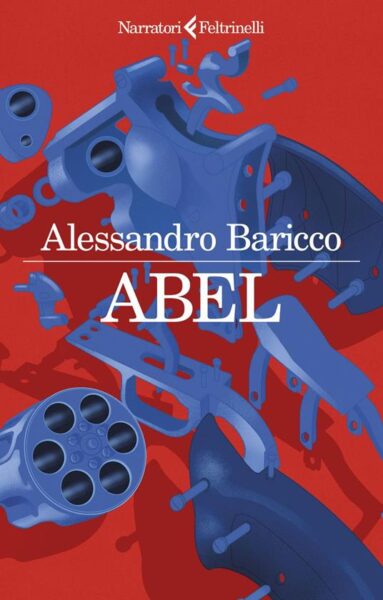
Abel
Alessandro Baricco
Can a Western Be a Metaphysical Novel?
Link copied
In Abel, Alessandro Baricco uses the classic Western as a stage for a far more abstract novel, one that explores freedom, love, causality, time, death, and the question of whether life really moves along the straight line we are used to imagining. It is no coincidence that Baricco defined the book, before it even existed as a story, in just two words: “Metaphysical Western.”
As for the plot, at its center is Abel Crow, who becomes a legend at just 27 years old. During a robbery, the young sheriff fires two accurate shots almost simultaneously at two different targets – a skill known as “the Mystic.” Everything seems perfectly set up for a classic Western. Except… it isn’t.
First Comes the Genre. Then the Story
The beginning of Abel is unusual even for Baricco. After years of writing, he began asking himself what he would create if he wrote with complete freedom without needing the book to serve any practical function in his life. One day, he opened a blank file with no plot in mind, no character, not even a specific story. And he typed the words: “Metaphysical Western.” The rest, as they say, is history.
Abel Crow – the Gunslinger Who Thinks About Aristotle
On the surface, Abel is the perfect Western protagonist. He is the sheriff of a small town in an imagined American West and possesses an almost supernatural talent with firearms. As mentioned above, “the Mystic” – firing two guns at two separate targets – turns him into a legend. He reminds me a little of the Gunslinger from Stephen King’s The Dark Tower, although, of course, the two characters have nothing in common. That is simply how I picture him.
Baricco, however, is not particularly interested in how many people Abel can shoot. He is far more interested in how a person capable of doing such a thing thinks. His protagonist reflects on philosophy, causality, free will, and time. Ideas connected to Plato, Aristotle, and David Hume unfold throughout the novel, while the familiar imagery of the Wild West begins to feel almost like a set of tools for a philosophical experiment.
Even Abel’s extraordinary skill with a gun takes on a different meaning. The mystical element is no longer simply the impossible shot. It becomes a way of trying to understand one’s place in the world.
Hallelujah Comes. Hallelujah Goes.
There is, of course, love. Her name is Hallelujah Wood. She is a mysterious woman who repeatedly appears in Abel’s life and then disappears again, without him knowing where she has gone. They love each other, but their relationship is not built on the promise that they will remain together forever. It is built more on the acceptance that sometimes the other person will leave. This pattern strangely echoes one of Abel’s deepest wounds.
Years earlier, his mother left as well. She took the four best horses and abandoned her children. Except she never came back. And so the classic Western image of the solitary man gradually begins to look different. Abel’s loneliness is not a heroic pose. It is something he carries with him.
When Are We Really Born?
Without going too far into spoilers, one of the novel’s most abstract characters – a witch – tells Abel that he has not yet been born. One day he will be. That moment simply has not arrived yet. At first, it sounds like a mystical line from a world that is slowly drifting away from reality. For Baricco, however, the idea is much more concrete.
In a later interview, he spoke about the difference between physical birth and the moment when a person truly “comes into being” for themselves – when they begin to understand who they are. And this is precisely what Abel experiences. The novel begins as the story of a man who seems fully formed. He has a profession, a legend, a gift, a love. And then, little by little, Baricco takes him apart.
A Western Where Women Refuse to Remain Background
Baricco also breaks another genre convention. The classic Western is usually a world of men. Women often exist as love interests, sources of conflict, or part of the scenery surrounding the hero.
In Abel, three of the most important figures in the protagonist’s life are women – Hallelujah, his mother, and the witch. Baricco himself describes this as one of the challenges he sets for the genre: Can there be a Western in which women do not merely appear, but actually shape a large part of the hero’s inner journey? In his version, the answer is clearly yes.
From Silk to a Mystic Shot
In fact, this is not so far from the way Baricco has always used genre. Silk can be described as a love story and an adventure. Ocean Sea as a novel about shipwreck, revenge, and a group of people gathered in an inn. Novecento as the story of a pianist who never leaves a ship. But plot summaries almost never explain why these books sound like Baricco. He takes a story that could be told relatively simply and begins removing the boundaries around it.
In Abel, the process is simply more visible. The Western gives him everything he needs: the guns, the horses, the wasteland, the sheriff, the woman disappearing toward the horizon. Baricco leaves all of them in place. And changes the questions.
Not:
Who shoots first?
But:
What does it mean to shoot?
Not:
Will the hero survive?
But:
Where, exactly, does his life end?
Not:
What happens next?
But:
Are we even sure there is such a thing as “next”?
And perhaps that is exactly why the description “metaphysical Western” is not just another elegant publishing label. It is almost a reading instruction. Because in Abel, the Wild West is not so much a place as a space where Alessandro Baricco can place a man between two gunshots and ask what really exists between birth and death.
Стани част от общността
Твоята библиотека започва тук
Всяка книга оставя следа.
Създай профил и превърни прочетеното в твоя лична библиотека.
Последвайте ни в социалните мрежи:
Have you read the book?
Rate it and share your thoughts with the Booklovers community.
Readers’ rating
★
★
★
★
★
No ratings yet
Log in to rate this book.


No comments yet. Be the first.