Fantasy
Omne trium perfectum.
Everything in threes is perfect.
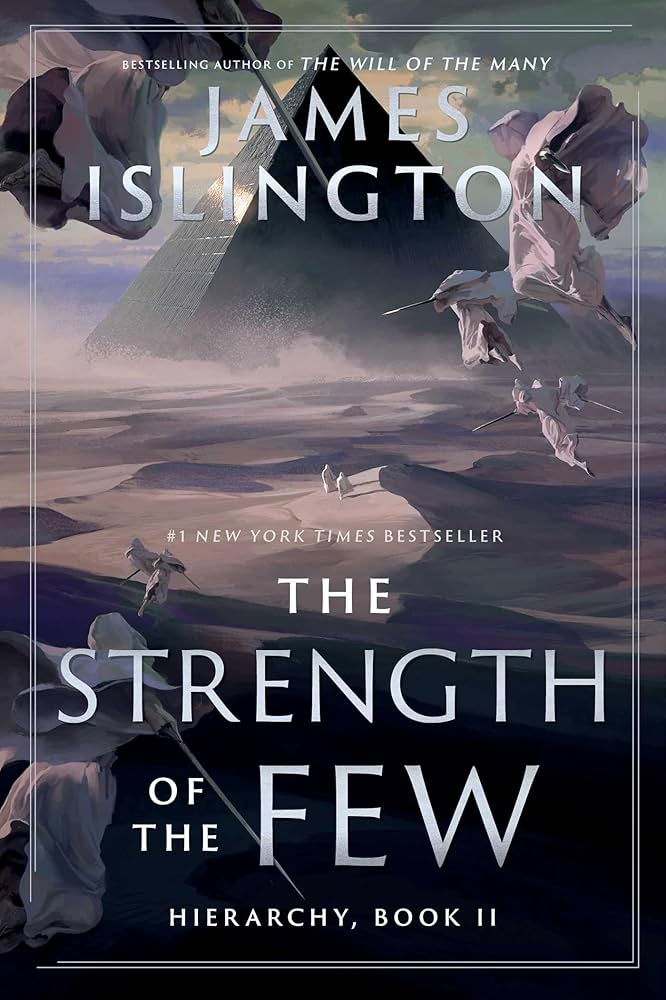
After the success of The Will of the Many, James Islington returns with the highly anticipated sequel in the Hierarchy series — The Strength of the Few. The novel promises an even larger-scale story filled with political intrigue, philosophical ideas, and a complex exploration of identity.
While the first book gradually built the world of the Catenan Republic and the mysteries surrounding the Labyrinth, The Strength of the Few expands its horizons in the most literal sense possible — the story now unfolds across three different realities simultaneously.
Three versions of the same man
After the events of the Judicium, Vis Telimus is no longer just a student of the Academy.
An ancient device beyond the Labyrinth splits his existence into three separate versions of himself, each living in parallel worlds — Obiteum, Luceum, and Res. Three bodies. Three different lives. Three different versions of Vis himself.
This is where the novel begins to distinguish itself from traditional epic fantasy. Rather than telling the story of a “chosen one,” Islington creates a psychological and philosophical conflict centered around how a person changes depending on the world they inhabit.
In an interview, the author explained:
“In Book 2, we’re following three different versions of Vis. Each version experiences things differently. They diverge, they change and that complexity made the book harder to write. You’re still following the same person at heart, but through three different lenses.”
It is precisely this structure that transforms the novel from a fantasy adventure into a story about identity, memory, and choice.
Who is Vis, really?
Interestingly, according to James Islington himself, Vis was the very first idea around which the entire world of the Hierarchy series was later built.
Responding to a reader question on Goodreads about whether he created the character or the world first, Islington wrote:
“From memory, Vis came first, with a vague idea of what the world around him should look like — and then the worldbuilding and story came after that.”
That likely explains why Vis feels so alive even amidst the immense political and philosophical scale of the story. No matter how complicated the world becomes, the emotional core remains rooted in his inner conflict.
The inspirations behind the series
James Islington was born and raised in Victoria, Australia. Among his early literary influences were the works of Raymond E. Feist and Robert Jordan, but it was only after reading Mistborn by Brandon Sanderson and The Name of the Wind by Patrick Rothfuss that he found the inspiration to begin writing himself.
And those influences can certainly be felt — in the carefully constructed magical and political systems, morally conflicted characters, slowly unfolding mysteries, and the sense that every detail matters.
Yet despite the comparisons to some of fantasy’s biggest names, Hierarchy is steadily forging an identity of its own.
More than epic fantasy
What makes The Strength of the Few especially compelling is that it doesn’t rely solely on battles, ancient secrets, and large-scale twists.
At its core, the story asks a far more uncomfortable question:
If different versions of the same person live entirely different lives… at what point do they stop being the same person?
That is what elevates the novel beyond a conventional fantasy sequel.
One version of Vis must survive through political games. Another learns to trust. A third learns to kill.
Loved.
Hated.
And completely alone.
Join the community
Your library starts here
Every book leaves a mark.
Create your profile and turn what you read into your personal library.
Follow us on social media: